
Calling any single method “the best” is a bold claim. If you’re searching for this topic, you’re likely moving past generic “pros and cons” lists. You’re looking for proof.
You may be a homeowner staring at a high water bill and a garden plagued by fungal disease. You might be a farmer or property manager needing a serious return on investment (ROI). Or, you could be a contractor needing hard data to justify a high-quality installation to a skeptical client.
You’ve come to the right place.
This article isn’t just a list of benefits. It is a data-driven case proving that drip irrigation isn’t just good—it is quantifiably the best and most efficient method for delivering water and nutrients to your plants. We will demonstrate this using evidence from the U.S. Environmental Protection Agency (EPA), scientific plant pathology journals, and university agricultural extensions.
Here are the 7 evidence-backed reasons why drip irrigation outperforms every other method.
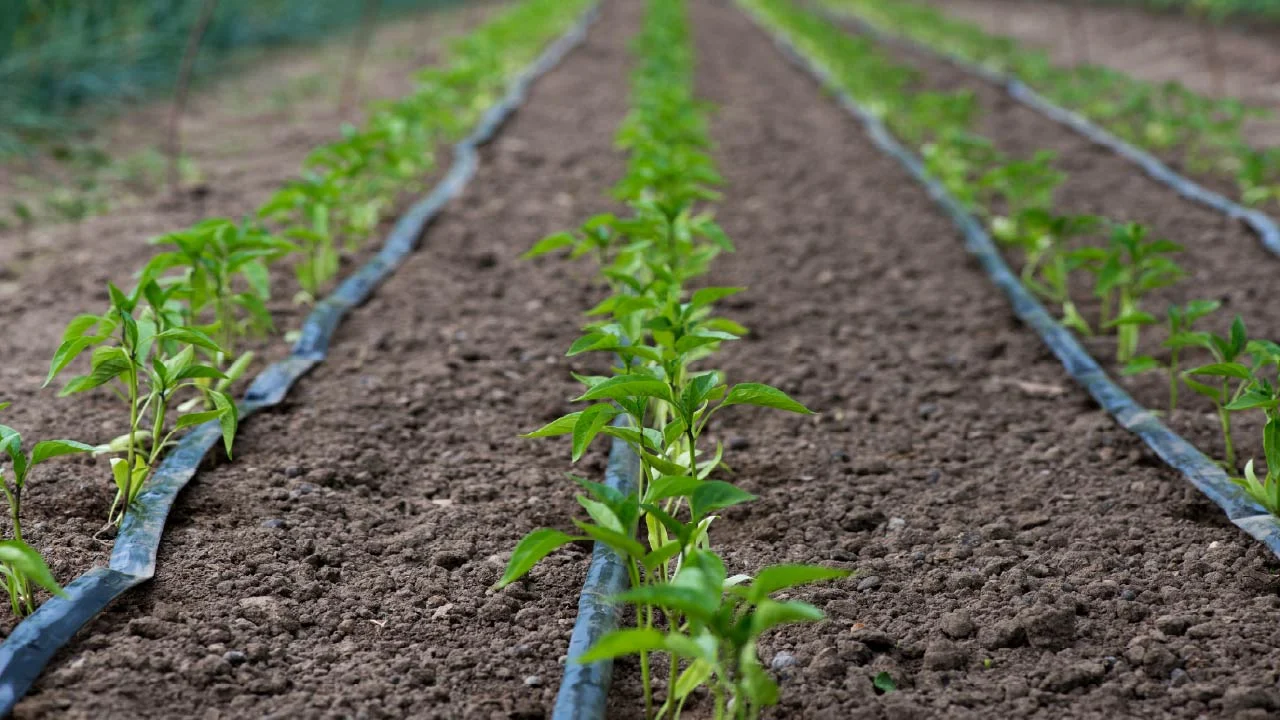
Reason 1: Unmatched Water Efficiency (Saves 20-50%)
The single most significant reason drip irrigation is superior is its radical efficiency. It fundamentally changes the goal from “watering the ground” to “watering the plant.”
The Problem with Sprinklers: The 3 Enemies (Evaporation, Wind-Drift, and Runoff)
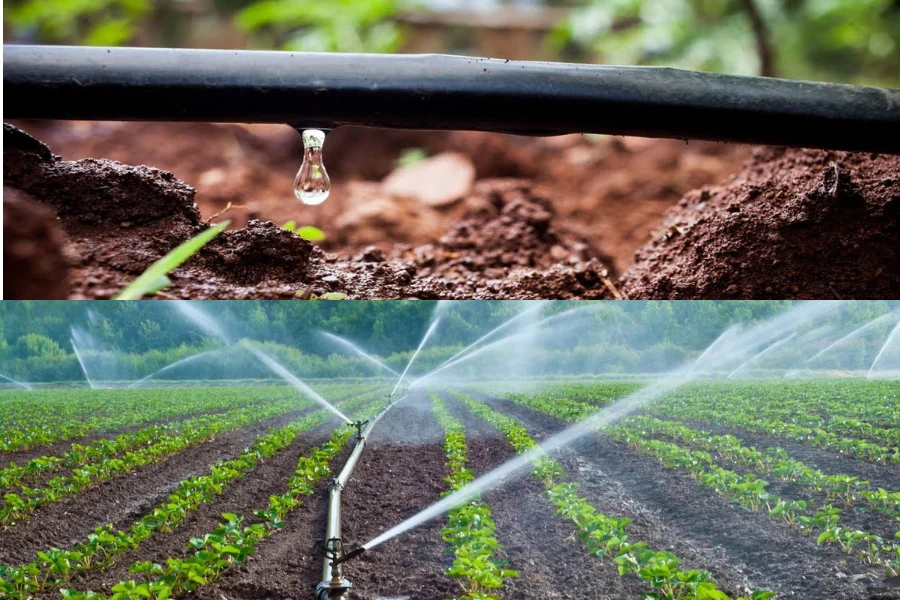
When you use traditional sprinklers (or spray heads), you are fighting a losing battle against physics. A significant portion of the water you pay for is lost before it ever reaches the roots:
- Evaporation: Water sprayed into hot, dry air evaporates on its journey from the nozzle to the ground.
- Wind-Drift: On even a slightly breezy day, water is blown onto sidewalks, driveways, or fences—areas that do not need watering.
- Runoff: On compacted soil (like clay) or slopes, sprinklers apply water faster than the ground can absorb it, leading to pooling and wasteful runoff.
Because of these three enemies, traditional sprinkler systems are often only 50-70% efficient. This means for every 10 gallons you pump, 3 to 5 gallons are completely wasted.
The Drip Solution: Delivering Water with 90%+ Efficiency
Drip irrigation is not a spray; it is a delivery. By using emitters (drip heads) placed directly at the base of the plant, it applies water slowly and precisely to the root zone.
This “slow-and-low” approach completely neutralizes the 3 enemies:
- Evaporation is nearly eliminated (water is under mulch or directly on the soil).
- Wind-drift is impossible (there is no spray).
- Runoff is prevented (the slow 1-gallon-per-hour drip is easily absorbed by even heavy clay soil).
The Proof: Citing EPA WaterSense Data
This isn’t just a theory; it’s certified data. The U.S. Environmental Protection Agency (EPA) WaterSense program states that drip irrigation systems use 20 to 50 percent less water than conventional sprinkler systems.
For an average home, the EPA notes this can save over 25,000 gallons of water per year. From the very first utility bill, drip irrigation proves its superiority in water conservation. It’s the difference between precision and waste.
Reason 2: Drastically Reduces Plant Disease
A “best” irrigation system shouldn’t just save water; it should actively improve plant health. This is where drip irrigation truly distances itself from the competition.
The Mechanism: Why Wet Leaves Are an Invitation for Fungal Disease
Ask any gardener about their biggest frustrations, and they’ll list powdery mildew, black spot, and blight. What do these have in common? They are fungal diseases whose spores require water on the leaf surface to germinate and spread.
When you use a sprinkler, you are essentially drenching the entire plant—leaves, stems, and all. You are creating the exact humid, wet-foliage environment that fungi thrive in. You are, in effect, inviting the disease.
How Drip Irrigation Breaks the Disease Cycle by Keeping Foliage Dry
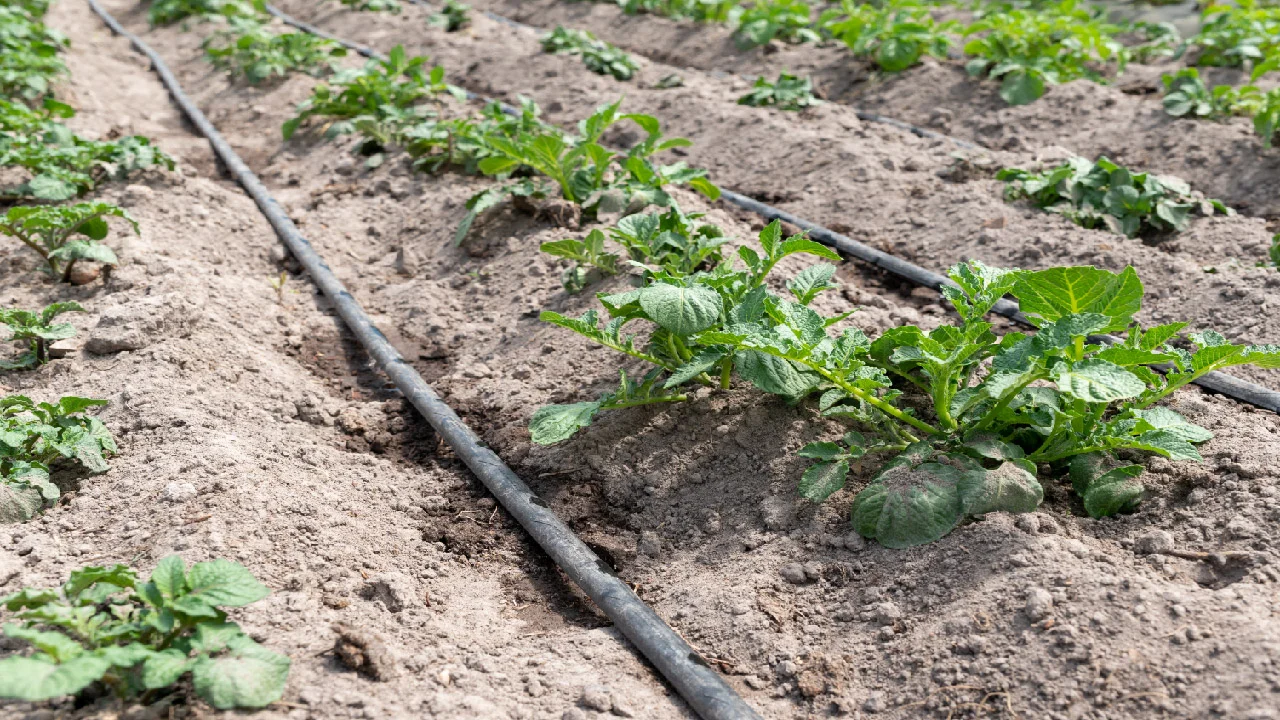
Drip irrigation solves this problem at its root (literally). It delivers water only to the soil. The plant’s foliage remains completely dry.
By eliminating wet leaves from the equation, you break the fungal disease cycle. You’re not just watering your plants; you’re protecting them. This means less money spent on fungicides, less stress, and healthier, more resilient plants.
The Proof: Citing APS Study (Sprinklers Show 170%+ More Disease Severity)
This is not just anecdotal. A 2024 study published in Plant Health Progress by the American Phytopathological Society (APS) directly compared sprinkler and drip irrigation on onions.
The result? Sprinkler-irrigated plots showed 170% higher foliar disease severity and 186% higher incidence of bulb rot compared to the drip-irrigated plots. The data is clear: drip irrigation is the “best” choice for plant health.
Reason 3: Boosts Crop Yield & Fertilizer Savings (The Power of “Fertigation”)
This is perhaps the most significant, yet most overlooked, benefit of drip irrigation—one that separates professional-grade systems from simple watering.
What is Fertigation? (And Why It’s Drip’s Secret Weapon)
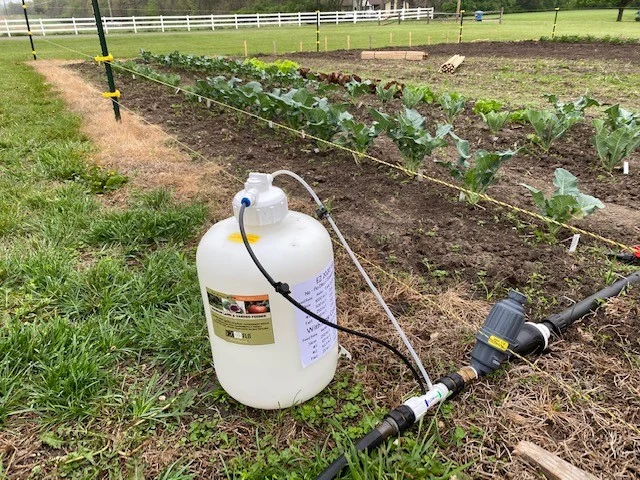
Fertigation = Fertilizing + Irrigation.
With drip irrigation, you can install a simple fertilizer injector that mixes liquid nutrients directly into your water source. This means every time you water, you are also delivering a small, precise dose of food directly to the root zone.
This is impossible with sprinklers, which would spray fertilizer all over your leaves (burning them) and onto the sidewalk. With broadcast fertilizing (throwing granules), you rely on wasteful overhead watering to wash the nutrients down, losing much of it to runoff.
The Proof: How it Cuts Fertilizer Loss and Boosts Yield (ROI Win)
By delivering nutrients directly to the roots, fertigation is unbelievably efficient.
- Environmental & Cost Win: University extension studies show that fertigation can reduce fertilizer use by 30-50%. You stop wasting fertilizer on weeds or allowing it to wash away into groundwater and streams.
- Yield Win: Because plants receive a consistent, stable supply of nutrients exactly where they need it, their growth and yield explode. Studies comparing drip fertigation to traditional methods have shown yield increases of up to 40% or more in crops like tomatoes, peppers, and onions.
This makes drip the “best” system for anyone who cares about ROI, from the home vegetable gardener to the commercial farmer.
Reason 4: Prevents Weed Growth (By Starving Them)
A sprinkler or flood irrigation system is non-discriminatory. It waters your prized tomato plants and every single weed seed in the topsoil with equal generosity. You are, in fact, cultivating your weed problem.
Drip irrigation is targeted. It creates small, wet zones at the base of your plants while keeping the surrounding soil surface dry. Weed seeds scattered between your rows never get the surface moisture they need to germinate. You stop feeding the competition. This means significantly less time spent weeding.
Reason 5: Slashes Labor Time (The Automation Advantage)
Your time is valuable. Drip irrigation is the ultimate “set-it-and-forget-it” system.
From “Drag-and-Spray” to “Set-and-Forget”
The old method involves dragging heavy hoses, setting up sprinklers, and remembering to move them every 30 minutes. It’s a daily, manual chore.
A drip system, once installed, is fully automated. It connects to a simple timer that runs the system for you, whether you are at work or on vacation. This isn’t just a convenience; it’s a fundamental change in how you manage your landscape, giving you back hours of your week.
The Ultimate Upgrade: Pairing Drip with Smart Controllers
For maximum efficiency, you can pair your drip system with a weather-based “smart controller.” These controllers check local weather data and automatically skip watering on rainy days or adjust run-times during a heatwave. This is the pinnacle of hands-off, efficient water management.
Reason 6: Protects Soil Structure & Reduces Erosion
How you water doesn’t just affect the plant; it affects the soil.
How Drip’s Slow Application Prevents Compaction and Runoff
The heavy, high-impact spray from sprinklers can, over time, hammer the soil surface, leading to compaction. Compacted soil can’t absorb water, which ironically increases runoff and starves roots of oxygen.
Drip irrigation’s slow, gentle application is exactly what soil loves. It allows water to percolate deep into the soil profile without disturbing its structure, promoting a healthy, aerated root environment.
Why Drip is the Only Viable Solution for Slopes and Hillsides
If you try to water a slope with a sprinkler, 90% of that water will run straight to the bottom, causing erosion and pooling, while the plants at the top remain bone-dry. Drip irrigation, with its slow application, is the only effective solution for slopes, as it gives the water time to soak in rather than run off.
Reason 7: Unmatched Versatility for Difficult Areas
Landscapes are rarely perfect squares. They have odd shapes, different soil types, and competing plant needs—all of which foil traditional irrigation.
How Drip Masterfully Handles Clay (Slow Intake) and Sandy (Fast Draining) Soils
- For Clay Soil: Sprinklers cause immediate runoff. Drip’s slow (e.g., 1 GPH) application allows the dense clay time to absorb the moisture.
- For Sandy Soil: Sprinklers waste water as it drains past the roots. Drip’s precise emitters keep a small, targeted area moist.
Key Comparison: Why Drip Outperforms Soaker Hoses (Pressure Compensation)
“But what about soaker hoses?” It’s a common question. While cheap, soaker hoses are fundamentally flawed. They are not pressure-regulated, meaning the hose will gush water at the start (near the spigot) and barely trickle at the end, 100 feet away.
Modern drip irrigation uses pressure-compensating (PC) emitters. This brilliant technology ensures that the first emitter and the last emitter on a 300-foot line deliver the exact same amount of water. This is the definition of precision and uniformity—something soaker hoses can never achieve.
Perfect for Odd-Shaped Beds Where Sprinklers Waste Water
That narrow strip of plants along your driveway? A sprinkler would soak your car and the concrete. A curved flower bed? A sprinkler can’t conform to it. Drip tubing is flexible, allowing you to lay it out in any pattern, delivering water precisely to each plant in any landscape design.
Addressing the “But…”: Debunking the 3 Big Drip Irrigation Myths
If drip is so superior, why doesn’t everyone use it? Because of three persistent myths. Let’s debunk them with facts.
Myth 1: “It clogs constantly.”
This is the #1 fear, and it’s based on a misunderstanding. Drip emitters don’t just “clog”; they clog because they weren’t protected.
- Fact: The Solution is Filtration. (A 2-Minute Fix). This isn’t a drip problem; it’s a filtration problem. Every properly designed drip system must start with a filter. This filter, placed right after the spigot, catches the sand, sediment, or minerals that cause clogs. Cleaning it takes two minutes, once a season.
- The Expert Matrix: Choosing Your Filter (Municipal Water vs. Well Water) The “best” filter depends on your water source. This is critical.
- If you use City/Municipal Water: You only need a simple “Y” Style Screen Filter. It catches the occasional small particle.
- If you use Well, Pond, or Rainwater: You have organic matter and high sediment. You must use a Disc Filter or, for heavy-duty farm use, a Sand Media Filter.
Clogging isn’t a failure of drip; it’s a failure to install the correct filter.
Myth 2: “It’s too expensive.”
- Fact: It’s an Investment with a 1-2 Year Payback. You are confusing an “expense” with an “investment.” Yes, a comprehensive kit has a higher upfront cost than a $20 sprinkler. But that sprinkler is costing you money every day.Let’s calculate the ROI. A drip system pays for itself, often in 1-2 seasons, from:
- Water Bill Savings: (20-50% reduction, per the EPA).
- Fertilizer Savings: (30-50% reduction from fertigation).
- Plant Savings: (No more replacing plants lost to fungal disease).
It doesn’t cost you money; it stops you from wasting money.
Myth 3: “It’s ugly.”
This is a valid concern for landscape-conscious homeowners. No one loves the look of black poly tubing.
- Fact: How to Make it Invisible (Two Ways).
- The Easy Way (Mulch): The system is designed to be covered. Simply lay your drip lines and then cover them with 2-3 inches of mulch. The system vanishes, and the mulch further helps retain moisture.
- The “Best” Way (Subsurface Drip): For the ultimate aesthetic—especially for lawns—you can use Subsurface Drip Irrigation (SDI). This is specially designed tubing that is buried 4-6 inches underground, delivering water directly to the roots, completely out of sight.
The Final Verdict: Why Drip is the “Best” Choice for You
Drip irrigation isn’t just “another option.” It is a systematic, data-driven upgrade to your entire approach to landscape management.
- For the Homeowner (Image 1): It’s the “best” because it gives you lower water bills, dramatically healthier (and disease-free) plants, and reclaims your free time from the chore of hand-watering.
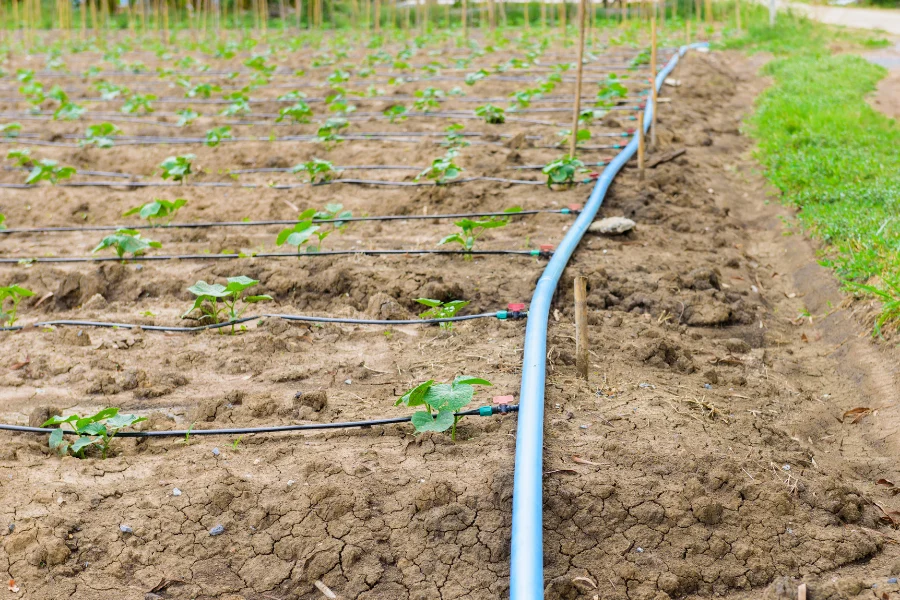
- For the Farmer/Property Manager (Image 2): It’s the “best” because it’s a cash-flow positive investment. It provides a measurable ROI through massive water/fertilizer savings and proven increases in crop yield and quality.
Managing a farm, vineyard, or commercial property? Your ROI depends on the right design. Schedule a free 15-minute consultation with our irrigation specialists to analyze your needs and maximize your yield.
- For the Contractor (Image 3): It’s the “best” because it’s the professional, reliable, and modern solution. It reduces callbacks (from disease or failed plants) and is the most defensible system to justify to high-value clients.
Contractors & Landscape Designers: Stop arguing over cost. Download our
$$White-Label$$Client Justification Brief (PDF) to clearly show your customers the long-term value and ROI of a professional drip installation.
Ready to plan your switch? After solving the “myths” of clogging and cost, the next step is planning.
Frequently Asked Questions (FAQ)
What is the main disadvantage of drip irrigation?
The main “disadvantage” is that it is less forgiving of improper installation than sprinklers. It requires a filter to prevent clogging, and it requires a pressure regulator to function. However, these “disadvantages” are simply components of a correctly installed system and are what guarantee its long-term efficiency.
Is drip irrigation or a soaker hose better?
Drip irrigation is far superior. A soaker hose is just a leaky pipe with no pressure control, leading to uneven watering (too much at the start, too little at the end). Drip irrigation uses pressure-compensating emitters to deliver the exact same amount of water to every plant, whether it’s at the start or end of the line.
Is drip irrigation better than sprinklers for a lawn?
Yes, but a specific type is used: Subsurface Drip Irrigation (SDI). The tubing is buried underground, watering the grass roots directly. This is the “best” way to water a lawn as it eliminates 100% of evaporation and wind-drift, and you never have to worry about sprinkler heads breaking.
How long does a drip irrigation system last?
A high-quality drip system, properly installed with filtration and covered with mulch (to protect from UV rays), can easily last 15-20 years or more.
How much water does drip irrigation actually save?
According to the U.S. EPA, drip systems can be 90-95% efficient, compared to sprinklers which are often 50-70% efficient. This results in 20-50% less water use for the same landscape.
How long should you run a drip irrigation system?
This depends heavily on your soil type, plant type, and emitter flow rate (GPH). The goal is to water longer but less frequently. A common starting point for garden beds is 2-3 times per week, running for 45-90 minutes, allowing water to penetrate deeply.
How does drip irrigation reduce weed growth?
It delivers water only to the base of your desired plants. The surrounding soil surface remains dry, preventing the germination of weed seeds that are waiting for surface moisture.